Read time: 3 minutes
Most of the time, businesses lose money to poor health because people show up to work while not feeling well.
US workers lose 63.4 productive days each year because of poor physical and mental health. Only 9.5 of those days are taken as sick leave. The other 53.9 days, or 85% of the total, are lost while people are still at work but not feeling well.
In the five countries studied, workers lose an average of 54.8 productive days each year. That adds up to almost 11 working weeks per person. In the UK, this costs £241 billion a year, which is about 8% of GDP.
(Source: Vitality Global Health and Productivity Index 2026, run with RAND Europe. It surveyed 9,206 workers in the UK, US, Germany, Japan and Singapore between February and March 2026.)
The days that go unnoticed
This is called presenteeism. It means people are at work, but their health is holding them back. They show up to every meeting and reply to every email, but they’re working at only half their usual pace.
Your absence report won’t catch any of this. Someone who shows up every day, even if they’re running on five hours of sleep, dealing with a bad back, or feeling stressed, still has a perfect attendance record. To spot presenteeism, watch for subtle signs like a drop in work quality, slower response times, reduced participation in meetings, or unusual quietness from someone who is usually engaged. A steady mood change, noticeable fatigue, or someone regularly staying late to finish basic tasks can also signal that health is affecting their work.
What to do this week
At your next one-to-one meetings, try adding this question: “How much has your health affected your work this week?” Ask everyone the same way each time and write down their answers. Create a safe, non-judgmental space by listening carefully, keeping responses confidential, and showing genuine care for what each person shares. Make it clear that honest sharing won't lead to negative consequences. Look for changes over several weeks, since one answer alone won’t tell you much.
Then take action based on what you hear. You might move a deadline, make someone’s week a bit easier, or let someone start later after several early flights. Other steps could include offering flexible work options, helping someone adjust their workload, encouraging shorter breaks throughout the day, or connecting them with an employee assistance program. Sometimes, simply reminding your team about mental health resources or checking whether their workspace is supporting their health can make a difference. Choose the approaches that fit your team and situation best.
The same study found that workers who feel their manager truly cares about their well-being lose nine fewer productive days each year than those who don’t. In a company of 50 people, that adds up to 450 days.
To sum up, most of the time, poor health costs your business at-desk time from people your absence records say are fine. Asking one question every week and acting on the answers is the simplest way to start seeing it.
From the app
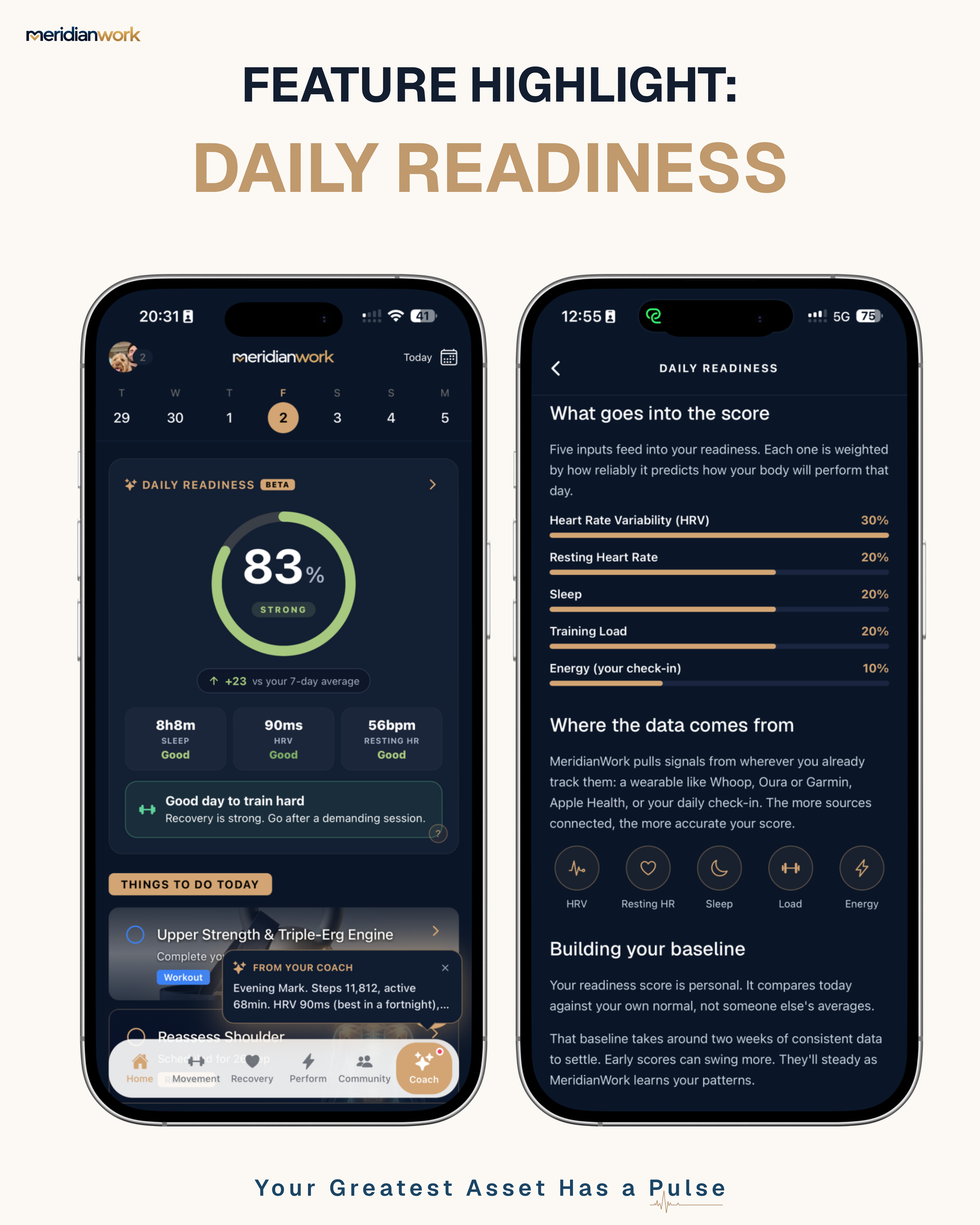
Daily Readiness gives everyone a score out of 100 each morning. It looks at heart rate variability, resting heart rate, last night’s sleep, yesterday’s workload, and how the person feels during their morning check-in. It compares the score to their usual numbers. It helps people see when they’re running low, so they can plan their day accordingly. The score is private and never appears in company reports. Managers can't access individual scores. You can encourage your team to try the app, but participation is entirely voluntary, and employees choose what to share, if anything. This helps build trust and keeps health information truly personal.
Try the app free: https://www.meridian.work/testing
Join the company waitlist: meridian.work/#apply
ReferencesVitality (2026a) Britain’s hidden productivity drain: workers at their desks but too unwell to function cost the economy £241 billion a year, finds landmark health survey. Press release, 8 October. Available at: https://www.vitality.co.uk/media/hidden-productivity-drain-cost-the-economy-241-billion-a-year/ (Accessed: 28 October 2026).Vitality (2026b) New Vitality research reveals U.S. employees lose 63 productive workdays each year due to poor health, with 54 of those days lost while working despite being unwell. Press release distributed by Business Wire, 8 October. Available at: https://www.01net.it/new-vitality-research-reveals-u-s-employees-lose-63-productive-workdays-each-year-due-to-poor-health-with-54-of-those-days-lost-while-working-despite-being-unwell/ (Accessed: 28 October 2026).